Learning guide · Chapter 6
Immersion: how to learn from real Japanese
Comprehensible input without the hype, when to start, active and passive listening, intensive and extensive reading, why you don't understand what you hear, and the free tools that make native content readable.
Comprehensible input, without the hype
Comprehensible input is language you can mostly understand, just a little above your level. The term comes from linguist Stephen Krashen's input hypothesis, first proposed in 1977: we acquire a language by understanding messages in it, moving from our current level (i) to the next (i+1) through input that's slightly beyond us.
It's fair to say the theory is contested. Critics point out that it's hard to test; Merrill Swain and others argue that producing language teaches things input alone doesn't; and some researchers think confusing input has value too, because noticing a gap makes you want to fill it. But nobody argues that input doesn't matter. The practical core that every guide here builds on is simple: lots of Japanese that you understand, over a long time.
One way to think about the balance, from A Year to Learn Japanese (opens in a new tab): input sets your ceiling (what you could understand or say), output sets your floor (what you can actually produce smoothly). You need both eventually, but input comes first and does most of the work.
When to start
Earlier than feels comfortable. The immersion guides say to start in your first week, with kana-level material and anime you've already seen. Even textbook-based plans suggest checking in with something real every week or so, so you notice the day it becomes bearable instead of waiting months past it.
Expect the first page of anything to be miserable. Tofugu calls it first page syndrome (opens in a new tab): the first page of a book is the hardest, because every name, word and style quirk is new. By chapter three the same book is noticeably easier. How early you can start comes down to two things: how much you mind not understanding, and how patient you are with looking things up.
Active and passive
- Active means paying full attention and trying to follow: watching with Japanese subtitles, reading with a dictionary, listening to a podcast with nothing else going on. This is where the learning clearly happens.
- Passive means Japanese in the background while you do something else. Its value is less clear, but it's free time: commutes, chores, the gym. Replaying audio from shows you've already watched works well, because you already know what's being said.
TheMoeWay suggests an hour or two of active immersion a day to start, about 70% listening and 30% reading at first, moving towards half and half as reading gets easier. Donkuri's simpler rule: always have one thing to read and one thing to watch or listen to on the go.
Listening
Listening lags behind reading for a long time; text waits for you and speech doesn't. When you don't understand something you hear, it helps to know why, because the fixes are different. A Year to Learn Japanese lists six reasons:
| Problem | What it looks like | What helps |
|---|---|---|
| Sounds | You can't tell where words start and end. | Pronunciation basics; listening to things you've read. |
| Knowledge | You hear the words clearly but don't know them. | More vocabulary: Anki and reading. |
| Register | Casual speech shortens and slurs forms you know (している → してる, ではない → じゃない). | Anime and conversation; a note of common contractions. |
| Speed | You'd understand it if you had a second longer. | Re-listening, slower audio, material you know well. |
| Context | You understand the words but not who or what they refer to. | Following one show or speaker for a long time. |
| Attention | You drifted for a few seconds and lost the thread. | Shorter sessions at a better time of day. |
- Stick with one voice. Following one YouTuber, podcast host or show for weeks is much easier than sampling, because you get used to their speed, accent and favourite words.
- Rewatch. An episode you've seen twice is a better listening lesson than a new one you half followed.
- Condensed audio cuts the silence out of an episode so only the dialogue is left; half an hour of anime becomes ten or fifteen minutes of listening. TheMoeWay's resource list links ready-made collections and the tools to make your own.
- Reading helps listening. Every word you know from reading is one you can catch by ear, and it's easier to diagnose what you missed in text than in speech.
Reading
- Intensive reading is slow and careful: look up everything, pick sentences apart. It's how you get through your first native texts.
- Extensive reading (多読, tadoku) is reading lots of easier text quickly, for the story, without stopping for every word. It builds speed and makes common words automatic.
Reading research suggests comfortable reading without a dictionary needs about 98% of the words on the page known. You won't be near that for a while, which is why a pop-up dictionary matters so much and why easier material pays off. VN Club's rule of thumb: aim to understand most of what you read with some effort. Not nearly nothing, not everything easily.
Habits that make reading easier
- Stay with an author or series. Ten books by one author are easier than ten by ten authors, because you learn their vocabulary and style once.
- Drop things that are too hard. In the time it takes to struggle through one hard book you could enjoy two or three easier ones, and improve enough to come back.
- Expect a bump when you switch medium. Manga, novels, visual novels and news each have their own vocabulary and style; the first of each is harder than your level suggests.
- Try pre-reading for difficult texts: skim a chapter, look up the words that recur, then read it properly.
- Look up what repeats. Words you meet three times in a chapter are worth it; one-off words you can skip once the sentence makes sense.
Subtitles
The guides differ in how strict they are. TheMoeWay says Japanese subtitles or none, full stop. Donkuri allows English subtitles as long as you're genuinely listening rather than just reading English. Both agree that an English-subbed episode you mostly read is not immersion.
| Subtitles | Good for |
|---|---|
| Japanese | The default. You read and hear the same words, and a pop-up dictionary works on them. |
| None | Shows you know well, and listening practice once Japanese subtitles become a crutch. |
| English | Watching something for the first time purely to enjoy it. Don't count it as immersion. |
TheMoeWay's 30-day routine starts total beginners with a three-step trick for one episode: watch it with English subtitles, then again with no subtitles, then play it in the background. By the third time the Japanese is attached to scenes you understand.
Tools
One tool matters more than the rest: a pop-up dictionary. Hover over a word, press a key, and you get its reading and meaning without leaving what you're reading. The rest of the tools exist to get Japanese text somewhere that dictionary can see it.
Yomitan
- Install Yomitan (opens in a new tab) for Chrome, Firefox or Edge. It's the maintained successor to Yomichan, which was discontinued, and it also works in Android browsers that support extensions.
- In its settings, choose Get recommended dictionaries. Install Jitendex (opens in a new tab), an improved version of the JMdict dictionary for English speakers that's updated monthly, and a frequency dictionary such as JPDB's, which shows how common each word is.
- Hold Shift and hover over Japanese text. You can change the key, or turn it off, in the settings.
- Later, add a Japanese-Japanese dictionary and a pitch accent dictionary. Donkuri's guide recommends ordering them: English dictionaries first, then Japanese, kanji, pitch accent and frequency last.
On phones without extension support, use a dictionary app: Jisho (opens in a new tab) in the browser, Takoboto or Akebi on Android, Shirabe Jisho on iOS.
By medium
| You want to | Use |
|---|---|
| Watch anime, drama, YouTube | asbplayer (opens in a new tab) shows Japanese subtitles over Netflix, YouTube, Crunchyroll or your own files, with a subtitle sidebar, Yomitan lookups and card mining. Subtitle files: Jimaku (opens in a new tab). For local files, Memento (opens in a new tab) is a video player built for lookups. |
| Read manga | mokuro (opens in a new tab) runs text recognition on manga pages so you can hover words, and reader.mokuro.app (opens in a new tab) reads the result in a browser. On a phone, all-in-one apps with built-in text recognition (TheMoeWay lists several) do the same. |
| Read novels | ッツ Ebook Reader (opens in a new tab) opens EPUBs in the browser with vertical text, Yomitan support and a character counter. It's in maintenance mode but still widely used. |
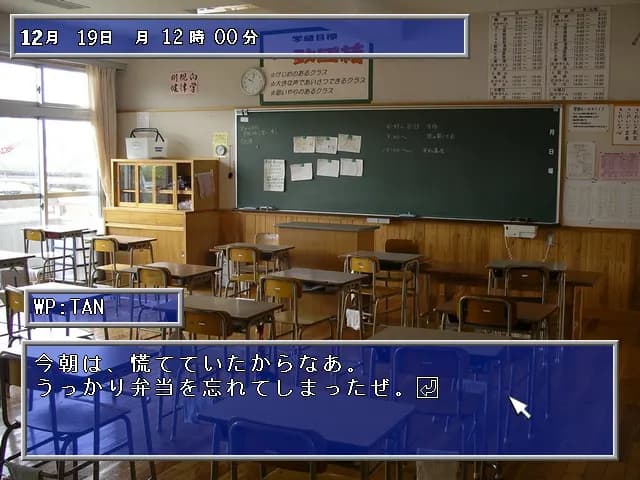
| Play visual novels and games | A texthooker copies each line of text out of the game: Textractor (opens in a new tab) or LunaTranslator (opens in a new tab). Point it at immersionlog's texthooker page and each line appears in your browser, ready for Yomitan, with characters and reading speed counted. For games a hooker can't read, OCR tools like owocr (opens in a new tab) recognise text on screen. |
Finding things at your level
- Jiten.moe (opens in a new tab) analyses more than 16,000 anime, novels, visual novels, manga and games: difficulty, length and vocabulary, and if you import your Anki or jpdb words, what share of a title you already know. It can export a title's vocabulary as an Anki deck to study before you start.
- Natively (opens in a new tab) has community difficulty ratings for books, manga and shows.
- Immersion Kit (opens in a new tab) and Massif (opens in a new tab) search for example sentences from anime, games and novels, for when a dictionary entry isn't enough.
- The next chapter ranks around sixty beginner-friendly titles by Jiten's difficulty.
Mining
Once your starter deck is done, make your own cards from words you meet in what you read and watch. Mined cards stick far better than deck cards because you remember the scene. With the AnkiConnect (opens in a new tab) add-on, Yomitan can create a card with the sentence, the word's audio and its definition in one click, and asbplayer adds a screenshot and the spoken line.
What to mine
VN Club's test for whether a word is worth a card:
- it feels learnable: something clicks when you look it up;
- it's useful: frequent, or central to what you're reading;
- it isn't obscure, archaic, or jargon you won't meet again.
Skip words you understood from context, and don't mine everything: your new-cards-per-day limit still applies. A frequency dictionary in Yomitan helps you decide at a glance.
Card setup
A mining card needs a note type with fields for the word, reading, sentence, definition, audio and picture. Donkuri's and TheMoeWay's current pick is Lapis (opens in a new tab), a simple note type designed to work with Yomitan and the other tools; jp-mining-note is a more feature-rich alternative. Donkuri's mining guide (opens in a new tab) walks through the whole setup.
Image credits
Count your hours
immersionlog tracks every hour of anime, manga, visual novels, books, YouTube and podcasts, and shows how far you've come. Free.